


 简体中文
简体中文 Japanese
 Korean
 Russian
 繁体中文
繁体中文
Valve selection
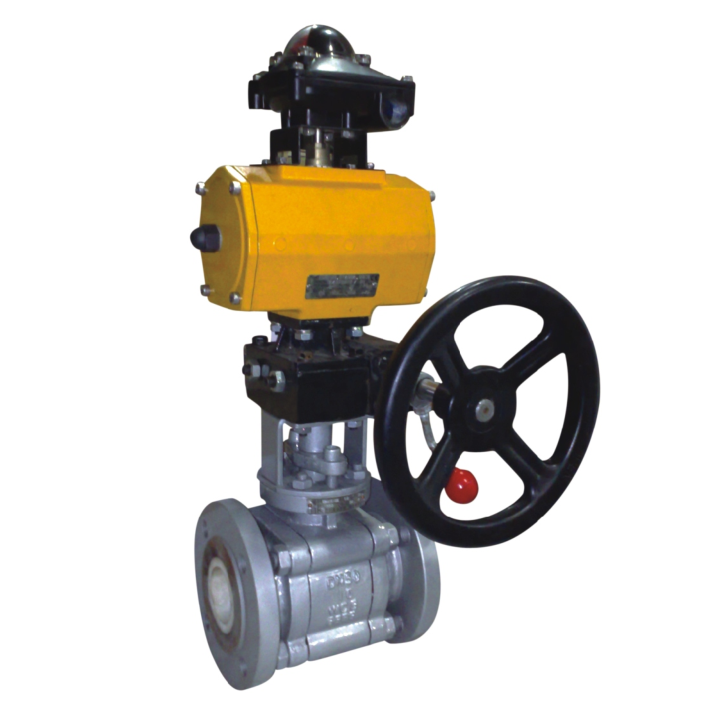
Pneumatic and manual dual-purpose ceramic lined ball valve
Pneumatic lined ceramic ball valve is an industrial valve characterized by a spherical body coated with ceramic material internally to increase wear resistance, corrosion resistance, and sealing performance. The internal valve core components of ceramic ball valves are made of toughened alumina or oxidized ceramic, which has extremely high chemical stability and hardness (Rockwell hardness HRC88), second only to diamond, and has extremely high wear resistance, corrosion resistance, and erosion resistance. It also has good thermal insulation, low coefficient of thermal expansion, high hardness, and high electrical and thermal insulation, and its performance is superior to other materials. Widely used in harsh working conditions where it is difficult to use metals or other materials, such as chemical equipment, waste incineration equipment, flue gas desulfurization equipment, etc., covering industrial fields such as power, petroleum, chemical, metallurgy, mining, and sewage treatment. The ball is manufactured using advanced grinding equipment and processes, with high roundness accuracy and good surface quality. After being aligned with the valve seat, it utilizes the self-lubricating properties of Zr02 structural ceramics to have excellent sealing performance, completely changing the disadvantages of metal hard sealed ball valves such as easy leakage, high torque, and non corrosion resistance of the sealing surface.
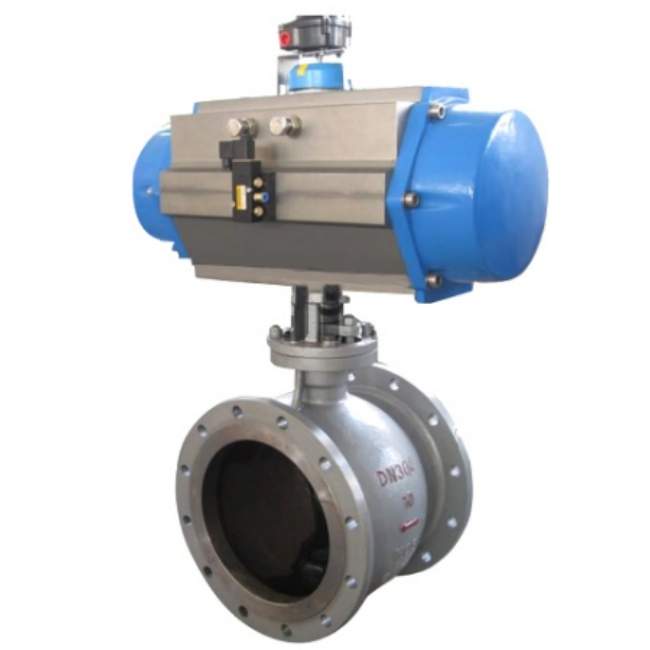
Pneumatic lined ceramic ball valve is a high-performance industrial valve designed specifically for harsh working conditions. By combining ceramic materials with pneumatic drive technology, it solves the application bottleneck of traditional valves in strong corrosion, high wear, and extreme temperature environments. Its core advantage lies in material innovation and structural optimization, which can significantly improve the reliability and service life of fluid control systems.
Structure and Material Characteristics
The valve adopts a composite layered design, and the external valve body is made of cast steel or stainless steel to ensure mechanical strength. The internal contact surfaces (including the sphere, valve seat, and flow channel) are all made of high-purity engineering ceramics (such as zirconia or silicon carbide) sintered as a whole. The hardness of the ceramic layer reaches HRA88-90, the wear resistance is 8-10 times that of metal materials, and it can still maintain stable physical properties in high or low temperature environments. A dual sealing structure is formed between the valve seat and the sphere through an elastic sealing ring and a precisely ground ceramic surface, ensuring zero leakage in both directions. The flange interface complies with international standards and is suitable for various industrial pipeline connection requirements.
Core technological advantages
The chemical inertness of ceramic materials endows valves with excellent acid and alkali resistance, capable of withstanding corrosive media with pH values ranging from 0-14, and suitable for controlling highly corrosive fluids such as hydrochloric acid and hydrofluoric acid. The full bore channel design reduces the fluid resistance coefficient to below 0.08, effectively reducing transportation energy consumption. The pneumatic actuator adopts a dual piston gear tooth strip transmission with a built-in buffer device. The opening and closing torque is reduced by more than 40% compared to traditional valves, and the response speed can reach up to 0.5 seconds per time. It is suitable for scenarios that require rapid cutting or high-frequency operations. In addition, the thermal expansion coefficient of ceramic components is only one-third of that of metals, and they can maintain sealing stability in a wide temperature range of -40 ℃ to 550 ℃.
Application scenarios and maintenance
This valve performs outstandingly in scenarios such as desulfurization systems in the power industry, transportation of corrosive media in the chemical industry, and mining metallurgical slurry pipelines. Its modular design supports quick replacement of vulnerable parts such as valve seats and sealing rings, and the maintenance cycle can be extended to more than three times that of traditional valves. In the fields of biopharmaceuticals and food processing, the smooth surface and absence of metal ion precipitation characteristics of ceramic materials can meet the requirements of sterile environments.
 Home
Home
 Valve selection
  News Information
  Consult Now