


 简体中文
简体中文 Japanese
 Korean
 Russian
 繁体中文
繁体中文
Valve selection
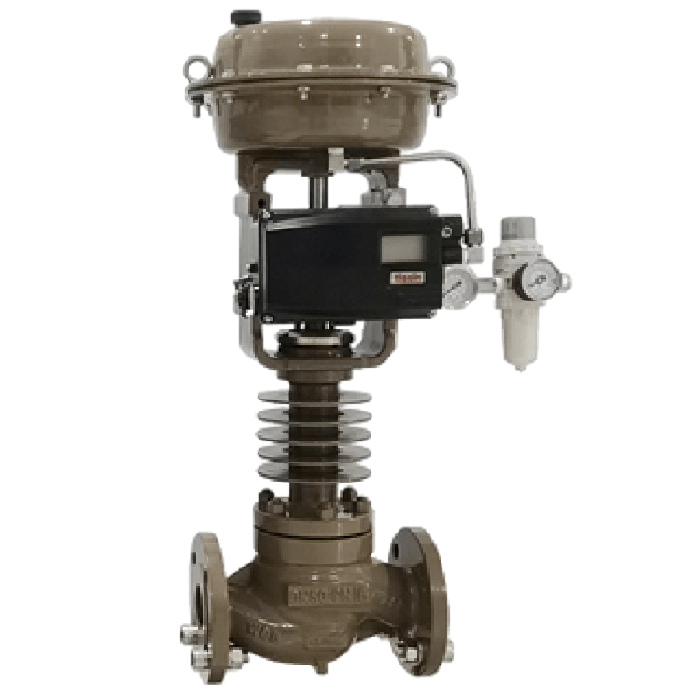
Pneumatic thin film heat dissipation plate high temperature regulating valve
The pneumatic thin film heat dissipation plate high-temperature regulating seat valve is a special control valve designed for precise control of high-temperature media. Its structure integrates thermodynamic compensation and fluid dynamics optimization principles. The valve body adopts a split casting process, and the main material can be selected from ZG1Cr18Ni9Ti austenitic stainless steel or WC6 chromium molybdenum alloy steel according to the working conditions. While maintaining high temperature strength, the heat radiation efficiency is enhanced through the heat sink structure. The valve cover is equipped with a circular array of heat dissipation fins, which accelerate the heat dissipation in the valve stem sealing area by increasing the surface area, effectively reducing the temperature gradient of the packing box and avoiding the common thermal failure problem of sealing components in traditional high-temperature valves.
The actuator adopts a multi spring thin film pneumatic structure and is equipped with a standard intelligent valve positioner, which can achieve linear control of valve position opening corresponding to 4-20mA signals. The specially designed corrugated tube sealing component completely isolates the working medium from the actuator, preventing direct heat transfer from the high-temperature medium to the diaphragm chamber. The thrust of the actuator is converted into torque through a lever mechanism, coupled with a low friction guide sleeve, to ensure stable adjustment accuracy within the temperature range of 0-600 ℃ medium.
The valve core component adopts a pressure balanced structural design, which offsets the axial thrust generated by the medium pressure difference on the valve stem through symmetrically distributed balance holes, reducing the load demand of the actuator. The sealing pair adopts cobalt based hard alloy welding process, combined with self centering valve seat structure, and can still maintain a sealing grade of IV (ANSI/FCI 70-2) or above under frequent opening and closing conditions. The guiding part of the valve core is equipped with graphite lubricating bushings, which form a solid lubricating layer in high temperature environments to reduce friction losses of metal components.
The thermal management system includes multi-layer composite insulation covers and active air-cooled cooling modules, which can be selected according to the on-site working conditions. The heat shield adopts a composite structure of ceramic fiber and metal reflective layer, which reduces the surface temperature of the valve body to a safe operating range; The air cooling system drives the turbine with an external air source to generate forced convection, controlling the temperature rise of key parts within the allowable range of the material. The valve stem is equipped with a double-layer packing seal, with a flexible graphite ring on the upper layer and a metal bellows on the lower layer, forming a stepped sealing protection.
This valve is suitable for harsh working conditions such as petrochemical cracking units, high-temperature oil and gas pipelines in coking systems, and molten salt circulation systems. It can accurately regulate fluid media with temperatures above 400 ℃ and pressures ranging from PN16 to PN40. The specially designed channel profile is optimized through CFD simulation, reducing the flow resistance coefficient to below 0.65 while maintaining the regulating characteristics. The product needs to meet the low leakage requirements of API 624 and undergo three-stage thermal cycling testing and high-temperature opening and closing life testing before leaving the factory to ensure long-term stability under thermal alternating conditions. During maintenance, functional recovery can be achieved by replacing valve internals online, reducing system downtime.
 Home
Home
 Valve selection
  News Information
  Consult Now