


 简体中文
简体中文 Japanese
 Korean
 Russian
 繁体中文
繁体中文
Valve selection
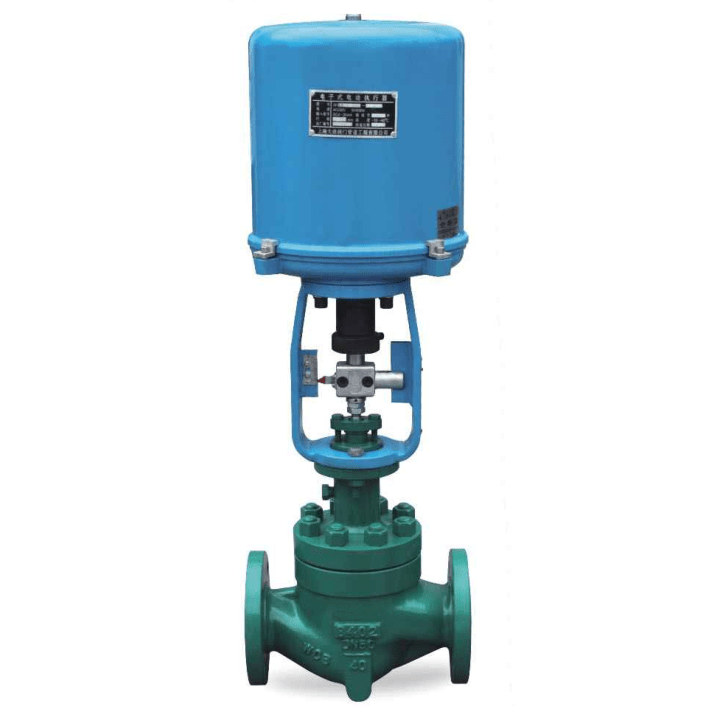
Electric single seat regulating globe valve
Electric single seat regulating globe valve is a fluid control device designed based on automation control requirements, mainly used for precise adjustment and reliable cutoff of parameters such as flow rate and pressure of media in industrial pipeline systems. Its structure consists of a valve body, a valve seat, a valve core, a valve stem, and an electric actuator. The electric actuator receives control signals and drives the valve stem to move the valve core along the axial direction, changing the flow area between the valve core and the valve seat, and achieving linear or equal percentage characteristic adjustment of fluid flow.
The valve adopts a single seat sealing structure, and a matching sealing surface is formed between the valve core and the valve seat through precision machining. When closed, it can form a rigid contact, and with the multi-layer sealing design of the packing box, it effectively reduces the risk of medium leakage. The valve seat usually adopts a detachable design, which is convenient for later maintenance or replacement. According to the requirements of the working conditions, the sealing surface can be selected from soft sealing materials (such as polytetrafluoroethylene) or metal hard sealing materials, suitable for environments with different temperatures, pressures, and corrosive media.
Electric actuators are usually equipped with high-precision servo motors, integrated position feedback modules, and signal converters, which can receive 4-20mA analog signals or bus communication commands to achieve precise control of valve position and opening. Some models are equipped with manual operation devices, which can be switched to manual mode during power failure or debugging. The valve body material can be cast steel, stainless steel, or special alloys according to the characteristics of the medium. The working temperature range covers -196 ℃ to 550 ℃, and the pressure rating can reach PN16-PN160, meeting the stringent requirements of conventional industrial pipeline systems.
The valve body has a compact structure and adopts a straight through flow channel design, with low fluid resistance, suitable for working conditions that require precise adjustment and moderate pressure difference. Typical applications include reactor feed control in chemical production, steam regulation in thermal systems, and dosing flow control in water treatment engineering. Its adjustment characteristic curve can be adjusted by replacing valve cores of different shapes to meet the needs of fast response or high-precision adjustment.
In terms of maintenance, the valve internals adopt modular design, and key sealing components support quick replacement. During installation, it is important to ensure that the flow direction of the medium is consistent with the direction indicated on the valve body. Regularly check the sealing status of the packing gland and the lubrication of the mechanical transmission components of the actuator. In scenarios containing particles or viscous media, it is recommended to configure blow off ports or use special surface treatment processes to extend the service life of the valve.
 Home
Home
 Valve selection
  News Information
  Consult Now